13 TIMES ISAIAH 53 STUNNINGLY shows that the “ARM OF THE LORD” who ‘bared his soul unto DEATH and bore the SINS OF MANY’ (Isaiah 53:12) is JESUS fulfilled and crucified in the Gospels “to give his life as a ransom for MANY” (Mark 10:45).
1. The Jewish Tanakh (Old Testament) book of Isaiah, written about 700 years before the New Testament, speaks of the revelation of the Messiah as the ‘arm of the Lord’
“Who has believed our message and to whom has the ARM OF THE LORD been revealed?” (Isaiah 53:1)
The” arm of the Lord” was ‘smitten of God’, ‘crushed’, ‘wounded’, ‘led as a lamb to the slaughter’ ‘and the LORD hath made to light on him the iniquity of us all’, ‘he was CUT OFF out of the land of the LIVING, for the transgression of my people to whom the stroke was due’ ‘Yet it pleased the LORD to BRUISE him; he hath put him to grief: when thou shalt make his soul an OFFERING FOR SIN’ (RESITUTION) and ‘bared his soul unto DEATH and bore the SINS OF MANY’ [Isaiah 53 Tanakh Jewish Bible].
The Gospel book of John (from which Muslims claim Muhammad is the Spirit of Truth who was to come) confirms that Jesus Christ is the “arm of the Lord” of the Old Testament.
“But although He had done so many signs before them, they did not believe in Him, that the word of Isaiah the prophet might be FULFILLED, which he spoke: “Lord, who has believed our report? And to whom has the ARM OF THE LORD been revealed?”
(John 12:37-38)
2. According to the prophecy in Isaiah 53, the Messiah was to be lowly and not flashy or majestic as one would expect of a king:
“He grew up before him like a tender shoot, and like a root out of dry ground. He had no beauty or majesty to attract us to him, nothing in his appearance that we should desire him. (Isaiah 53:2).
When Nathaniel heard about the Messiah coming from Nazareth, he was understandably surprised: “Nazareth! Can anything good come from there?” Nathanael asked. “Come and see,” said Philip. (John 1:46)
Jesus came from humble circumstances:
‘Coming to his hometown, he began teaching the people in their synagogue, and they were amazed. “Where did this man get this wisdom and these miraculous powers?” they asked. “Isn’t this the carpenter’s son? Isn’t his mother’s name Mary, and aren’t his brothers James, Joseph, Simon and Judas? Aren’t all his sisters with us? Where then did this man get all these things?” And they took offense at him…’ (Matthew 13:54-57)
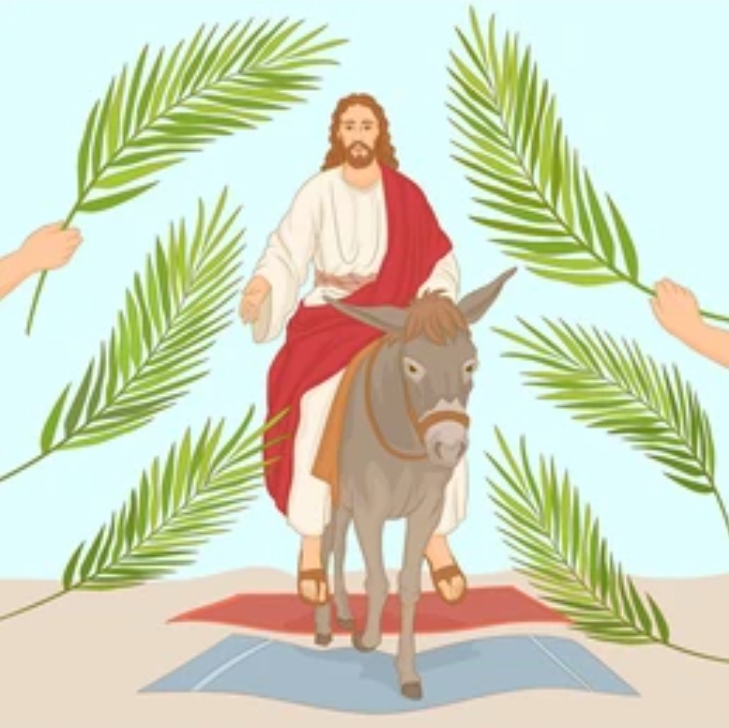
In Mathew 21:5 Jesus’s triumphant but humble entry into Jerusalem while riding a donkey is a fulfillment of prophecy by the prophet Zechariah (9:9). Unlike what would be normally expected of a king, the Messiah is described as ‘lowly’ and RIDING A DONKEY !
‘Rejoice greatly, Daughter Zion! Shout, Daughter Jerusalem! See, your king comes to you, righteous and victorious, lowly and riding on a donkey, on a colt, the foal of a donkey.’
(Zechariah 9:9)
3. “He was despised and rejected by mankind, a man of suffering, and familiar with pain. Like one from whom people hide their faces he was despised, and we held him in low esteem (Isaiah 53:3).
This Messianic prophecy from the book of Psalms agrees with Isaiah 53 regarding the suffering and contempt the Messiah would endure: “But I am a worm and not a man, scorned by everyone, despised by the people (Psalms 22:6).
“All who see me mock me; they hurl insults, shaking their heads”. (Psalms 22:7)
“He was in the world, and though the world was made through him, the world did not recognize him. He came to that which was his own, but his own did not receive him
(John 1:10-11).
‘And he [Jesus] said, “The Son of Man must suffer many things and be rejected by the elders, the chief priests and the teachers of the law, and he must be killed and on the third day be raised to life.” (Luke 9:22).
“who will mock him and spit on him, flog him and kill him. Three days later he will rise.” (Mark 10:34)
4. Jesus did not protest against his crucifixion but “He was oppressed and afflicted, yet he did not open his mouth.. ” (Isaiah 53:7).
“When they hurled their insults at him, he did not retaliate; when he suffered, he made no threats. Instead, he entrusted himself to him who judges justly (1 Peter 2:23).
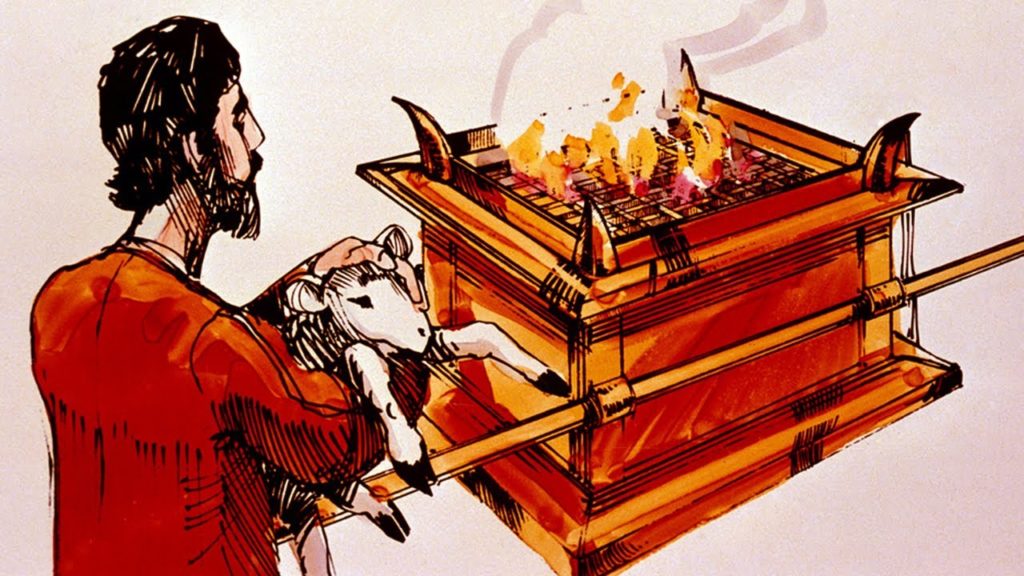
5. In the Jewish temple, the lamb was slaughtered as a sacrifice for the atonement of the sins of Israel. Jesus is symbolically the lamb who atones for the sins of mankind. “he was led like a lamb to the slaughter…” (Isaiah 53:7).
“The next day John saw Jesus coming toward him and said, “Look, the Lamb of God, who takes away the sin of the world!” (John 1:29)
“All inhabitants of the earth will worship the beast [Antichrist]—all whose names have not been written in the Lamb’s book of life, the Lamb who was slain from the creation of the world (Revelation 13:8).
6. “He was assigned a grave with the wicked, and with the rich in his death…” (Isaiah 53:9).
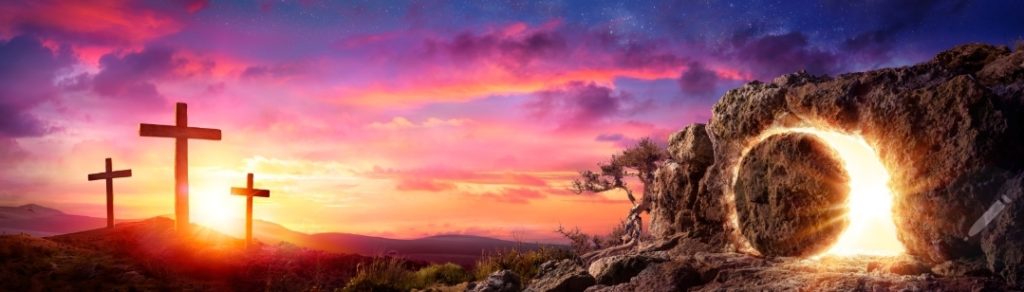
Jesus was crucified with two robbers (“the wicked”) and buried in the family grave of a rich man:
As evening approached, there came a rich man from Arimathea, named Joseph, who had himself become a disciple of Jesus. Going to Pilate, he asked for Jesus’ body, and Pilate ordered that it be given to him. Joseph took the body, wrapped it in a clean linen cloth, and placed it in his own new tomb that he had cut out of the rock. He rolled a big stone in front of the entrance to the tomb and went away. (Matthew 27:57-60).
7. The arm of the Lord (the Messiah) is FAULTLESS and HOLY:
“.. though he had done no violence, nor was any deceit in his mouth (Isaiah 53:9).
Pilate said to Him, “What is truth?” And when he had said this, he went out again to the Jews, and said to them, “I find no fault in Him at all. (John 18:38)
‘Simon Peter answered him, “Lord, to whom shall we go? You have the words of eternal life. We have come to believe and to know that you are the Holy One of God.” (John 6:68-69)
8. It was God’s WILL for the Messiah to make his life an offering for sin.
“Yet it was the Lord’s will to crush him and cause him to suffer, and though the Lord makes his life an offering for sin.
(Isaiah 53:10)
“Father, if you are willing, take this cup from me; yet not my will, but yours be done.”
(Luke 22:42)
9. “… HE SHALL PROLONG HIS DAYS… ” (Isaiah 53:10)
This means that the Messiah would rise from the dead. “prolong his days” is actually an expression, put together with other scripture, that the Messiah will live long, throughout all ages, to all ETERNITY; though he was DEAD, he is ALIVE, and lives for evermore; lives to see all the children (seed) that the Father gave him, and he has gathered together by his death.
‘Then he (Jesus) opened their minds to UNDERSTAND THE SCRIPTURES, and said to them, “Thus it is written, that the Christ should suffer AND ON THE THIRD DAY RISE FROM THE DEAD,” (Luke 24:45-46)
(See also Psalm 22)
10. “… HE SHALL SEE HIS SEED (Isaiah 53:10)
or, “a seed”; a spiritual seed and offspring; a large number of souls—children of God—that shall be born again, of incorruptible seed, as the fruit of his sufferings and death:
“Yet to all who did receive him, to those who believed in his name, he gave the right to become children of God— children born not of natural descent, nor of human decision or a husband’s will, but born of God.” (John 1:12-13)
This promise of the Messiah is made through David.”His SEED shall endure for ever, And his throne as the sun before me.”Psalm 89:36
Jesus made reference of the seed and how it relates to his crucifixion and therefore the salvation of many:
“Very truly I tell you, unless a kernel of wheat falls to the ground and dies, it remains only a single SEED. But if it dies, it produces MANY SEEDS. (John 12:24).
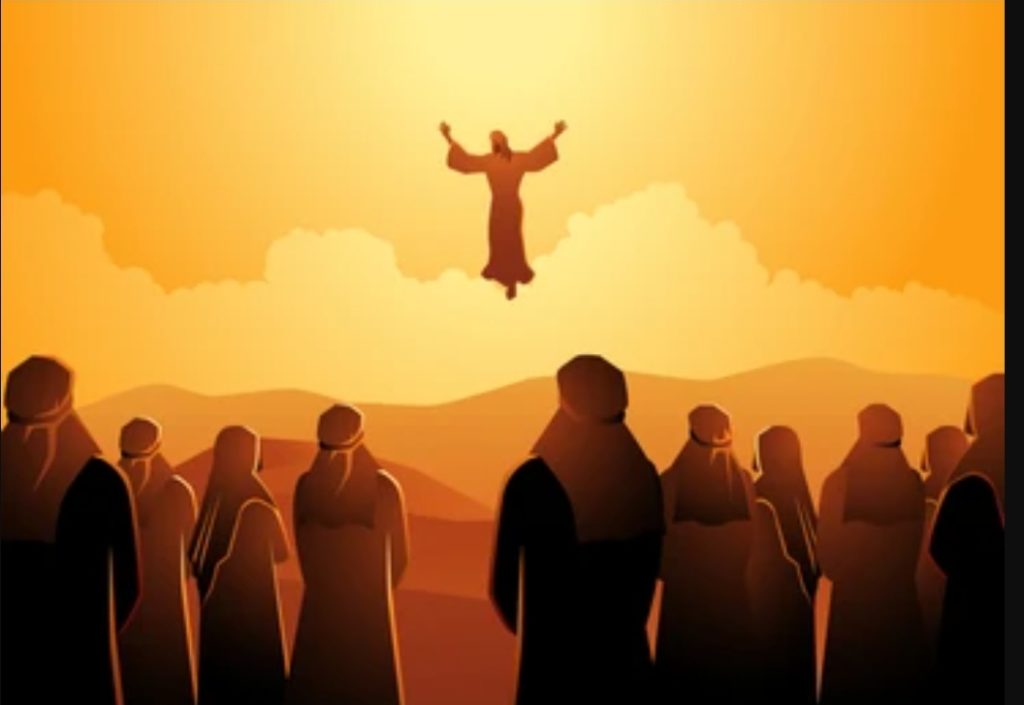
Jesus began to see after his resurrection from the dead, and ascension to heaven; when great numbers were converted among the Jews, and after that multitudes in the Gentile world, and more or less in all ages; ever since has he had a seed to serve him; and so he will in the latter day, and to the end of time.
11. Jesus confirms that Isaiah 53:12 is about himself being numbered with the transgressors:
“Therefore I will divide him a portion with the many, and he shall divide the spoil with the strong, because he poured out his soul to death AND WAS NUMBERED WITH THE TRANSGRESSORS; yet he bore the sin of many, and makes intercession for the transgressors.” (Isaiah 53:12).
“For I tell you that this Scripture must be fulfilled in me: ‘AND HE WAS NUMBERED WITH THE TRANSGRESSORS.’ For what is written about me has its fulfillment.” (Luke 22:37).
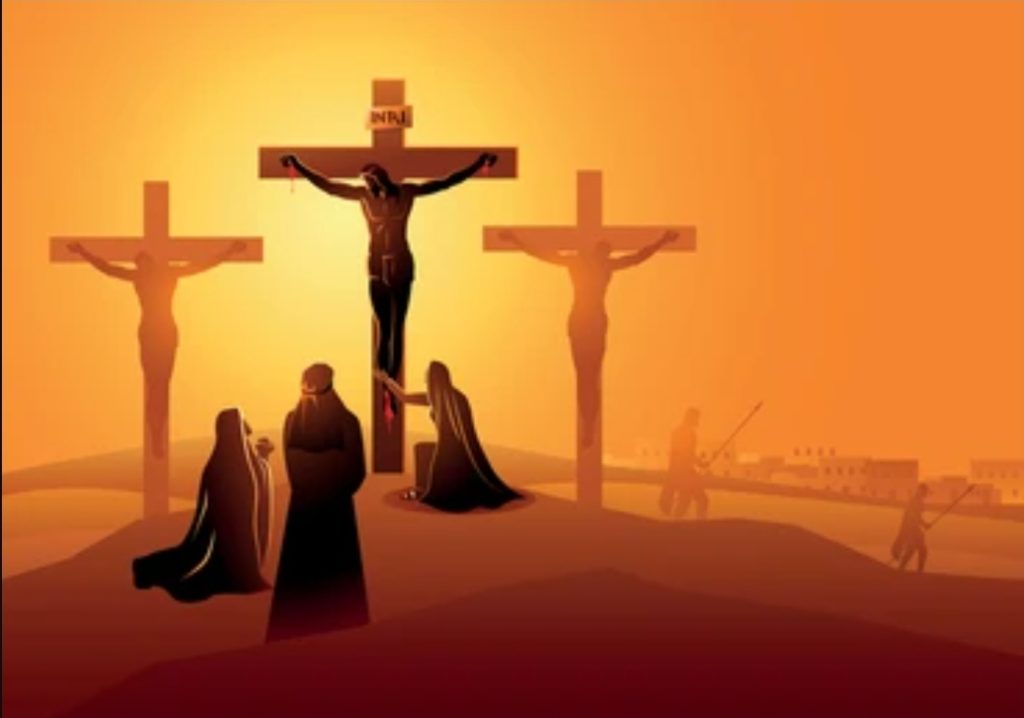
‘With Him they also crucified two robbers, one on His right and the other on His left. So the Scripture was fulfilled which says, “AND HE WAS NUMBERED WITH THE TRANSGRESSORS.” (Mark 15:27-28)
12. Jesus’s disciple, Peter, also confirms that Isaiah 53 is about the Messiah’s crucifixion on the cross! “For he bore the sin of many, and made intercession for the transgressors (Isaiah 53:12).
“He himself bore our sins” in his body on the cross, so that we might die to sins and live for righteousness; “by his wounds you have been healed.” (1 Peter 2:24).
13. Jesus is the one who intercedes (mediates) for our sins:
“… For he bore the sin of many, and made intercession for the transgressors.” (Isaiah 53:12)
‘Therefore he is able to save completely those who come to God through him, because he always lives to intercede for them.
(Hebrews 7:25)
A. Powerful video on the crucifixion of Jesus Christ fulfilling the prophecy of Isaiah 53:
https://youtu.be/oC6A7Addo5s
B. WATCH reaction of these two JEWS to the new testament and the crucifixion
1. https://youtu.be/5sMEkGoojbg
2. https://youtu.be/eu4BaZyweuE
C . Check the channel ONE FOR ISRAELfor the growing church in Israel. https://youtu.be/X6UfxZbQDSE