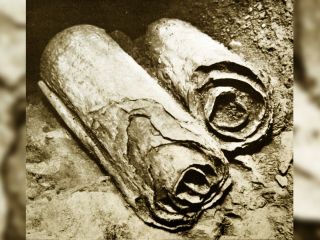
Were the DEAD SEA SCROLLS useful in confirming the accuracy and preservation of the Old Testament?
Dr. Patrick Zukeran reviews the discovery of and important historical findings from the DEAD SEA SCROLLS: “The texts discovered provide clear evidence as to the accuracy of our version of the Old Testament and the care with which it was preserved.
The Old Testament that we use today is translated from what is called the Masoretic Text. The Masoretes were Jewish scholars who between A.D. 500 and 950 gave the Old Testament the form that we use today. Until the Dead Sea Scrolls were found in 1947, the oldest Hebrew text of the Old Testament was the Masoretic Aleppo Codex which dates to A.D. 935.{5}
With the discovery of the Dead Sea Scrolls, we now had manuscripts that predated the Masoretic Text by about one thousand years. Scholars were anxious to see how the Dead Sea documents would match up with the Masoretic Text. If a significant amount of differences were found, we could conclude that our Old Testament Text had not been well preserved. Critics, along with religious groups such as Muslims and Mormons, often make the claim that the present day Old Testament has been corrupted and is not well preserved. According to these religious groups, this would explain the contradictions between the Old Testament and their religious teachings.
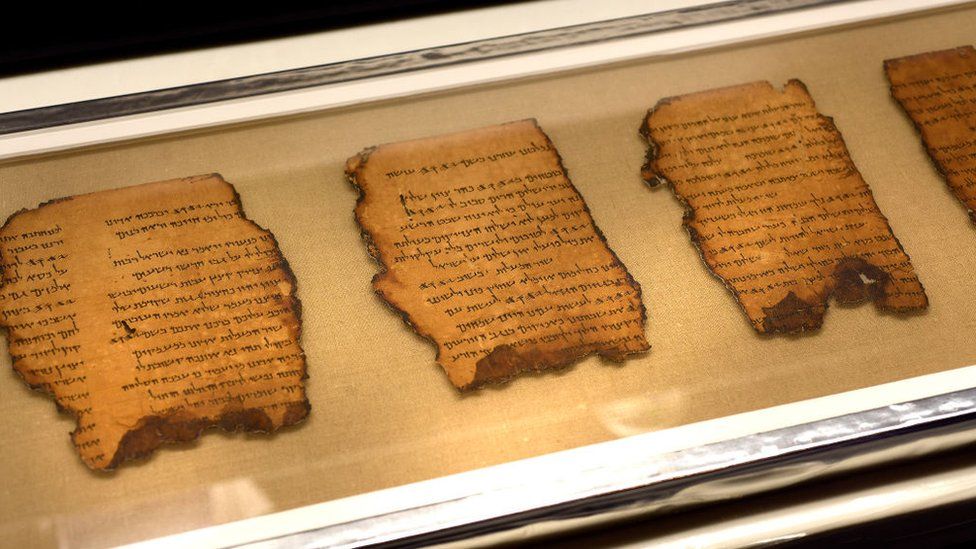
After years of careful study, it has been concluded that the Dead Sea Scrolls give substantial confirmation that our Old Testament has been accurately preserved. The scrolls were found to be almost identical with the Masoretic text. Hebrew Scholar Millar Burrows writes, “It is a matter of wonder that through something like one thousand years the text underwent so little alteration. As I said in my first article on the scroll, ‘Herein lies its chief importance, supporting the fidelity of the Masoretic tradition.’”
A significant comparison study was conducted with the Isaiah Scroll written around 100 B.C. that was found among the Dead Sea documents and the book of Isaiah found in the Masoretic text. After much research, scholars found that the two texts were practically identical. Most variants were minor spelling differences, and none affected the meaning of the text.”